editorial illustration
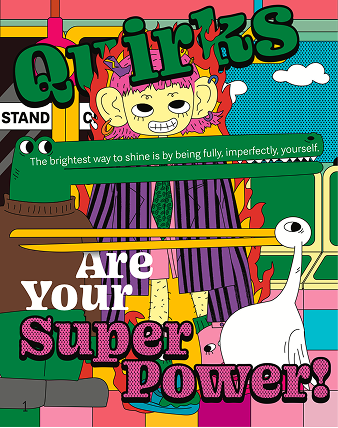
Quirks Are Your Superpower
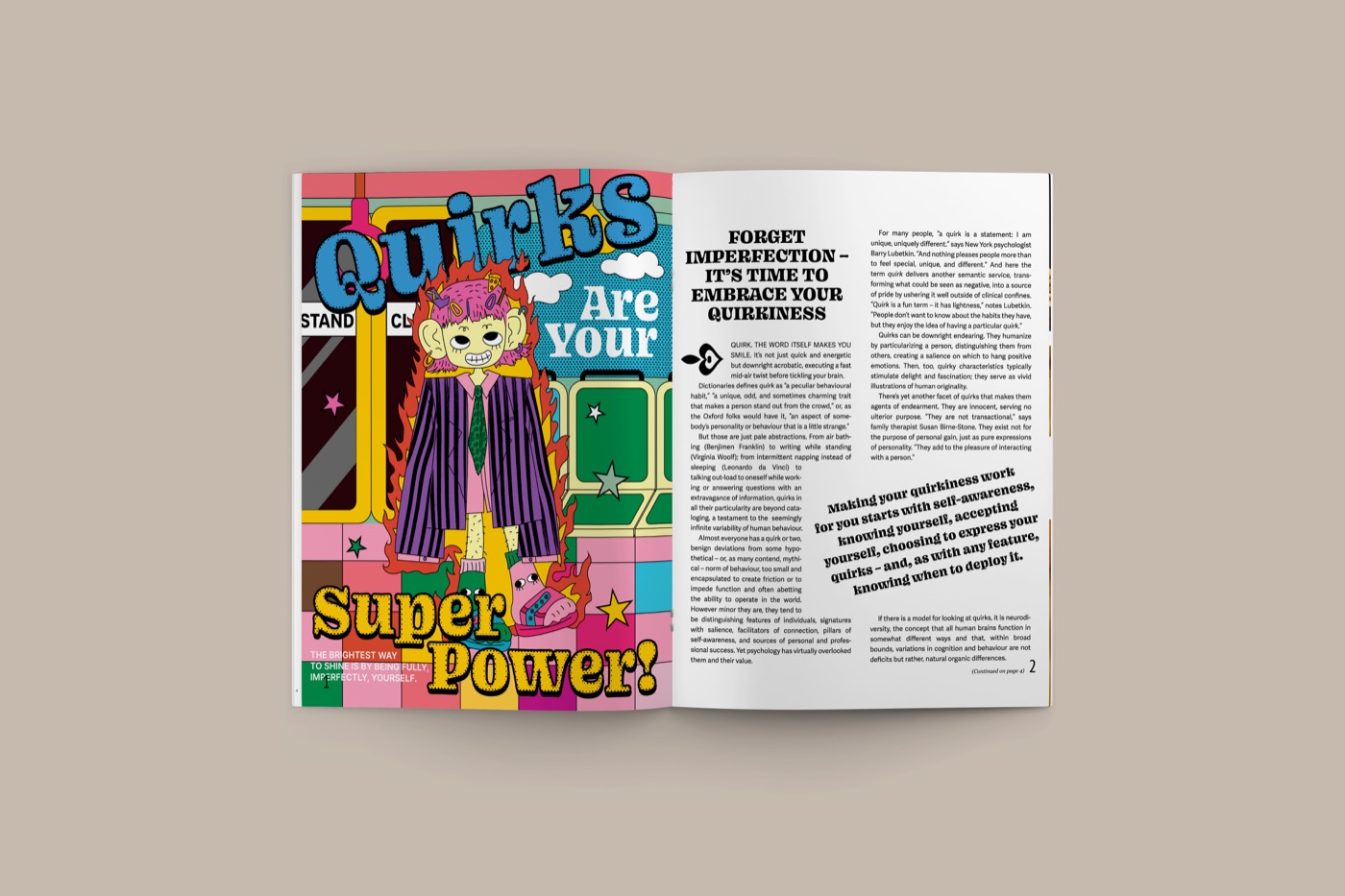
Project overview: Quirks Are Your Superpower is an editorial illustration project based on a four-page magazine article exploring individuality, imperfections, and the small quirks that make people unique. The objective was to create three CMYK editorial illustrations that visually communicate key ideas from the article while working cohesively within the magazine layout.
Before illustrating, I read and analyzed the full article to identify its main themes, stories, and visual opportunities. Rather than illustrating the text literally, I explored how each image could summarize an idea, create curiosity, and help readers emotionally connect with the content.
From article to visual concepts
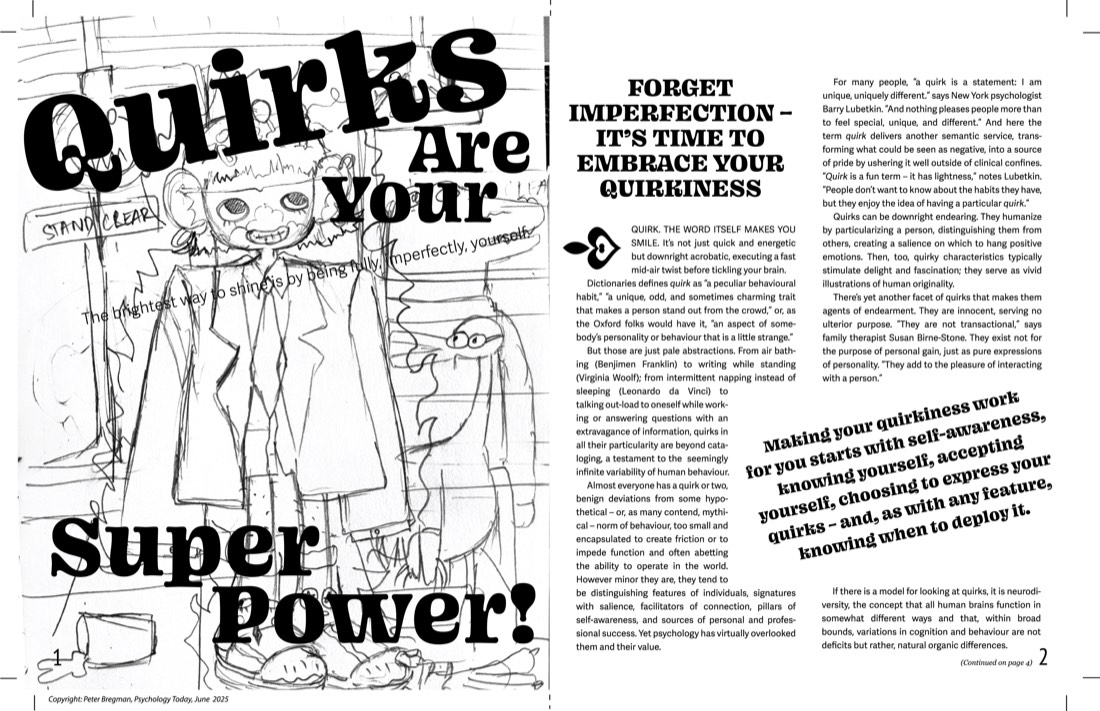
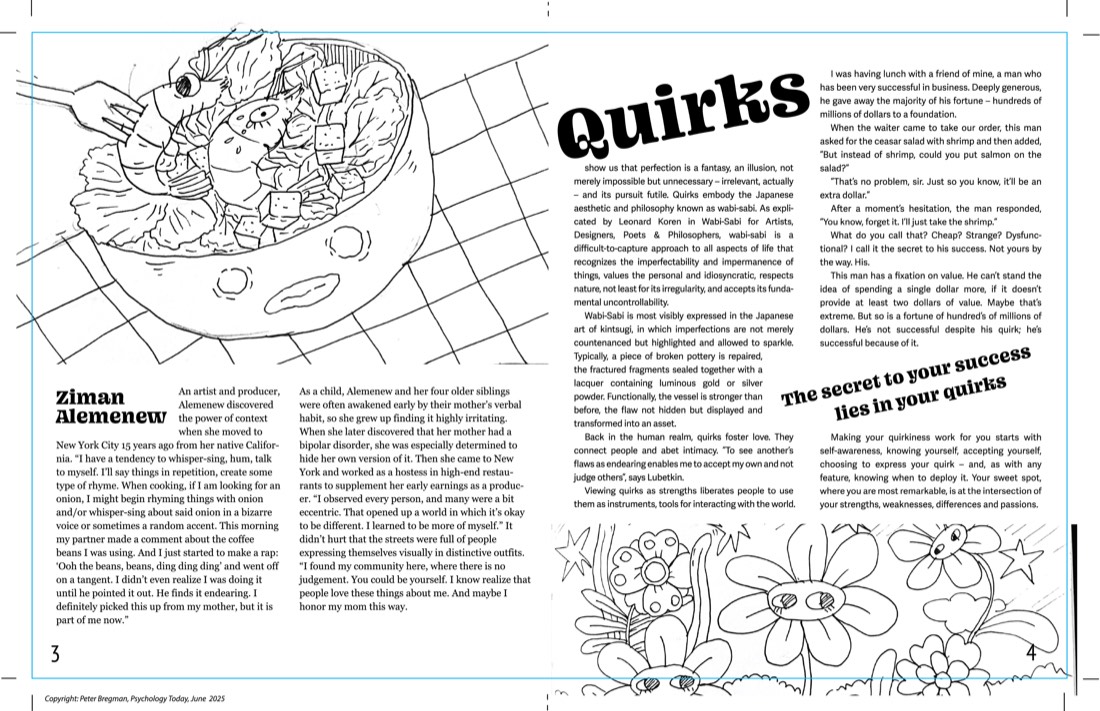
I began by highlighting key moments from the article and translating them into rough sketches. My first concepts experimented with characters, objects, and visual metaphors to represent individuality and unconventional behavior.
The initial sketches were intentionally exploratory. At this stage, my focus was not on creating polished artwork, but on finding a visual concept that could communicate the article clearly within a single image.
Feedback & challenge
One of the biggest challenges was learning the difference between an interesting image and an effective editorial illustration.
Feedback on my first concepts showed that some of my visual metaphors were too abstract or disconnected from the article. For example, certain objects and characters created visual interest but did not have a clear relationship to the story. Another concept focused too heavily on an object mentioned in the article rather than the person and experience at the centre of that section.
This pushed me to reconsider each illustration by asking: what does the reader need to understand from this image, and does every visual element support that idea?
Refining the concepts
Based on the feedback, I returned to the article and simplified my ideas. I removed unnecessary elements, strengthened the relationship between the illustrations and specific moments in the text, and focused more on the personalities and experiences described in the article.
The refinement process helped me create illustrations that were not only visually expressive, but also more intentional in how they communicated the editorial message.
Combining illustration & AI
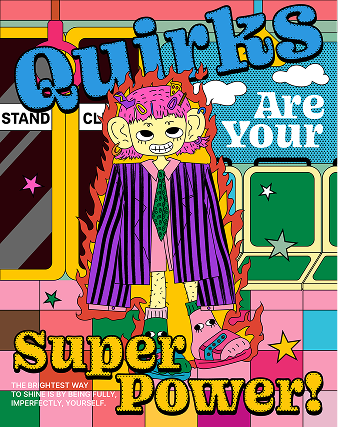
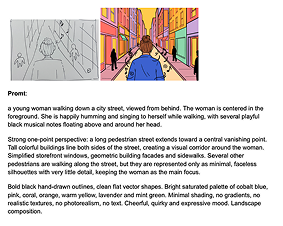
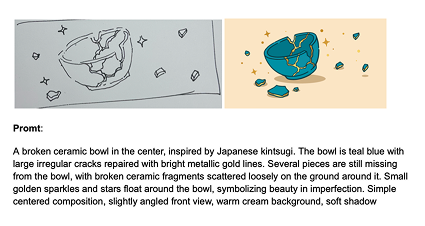
The final series combines traditional digital illustration with an AI-assisted creative workflow. One illustration was drawn entirely by me in Adobe Illustrator. For the other two, I first developed the concepts through my own sketches and then used Adobe Illustrator's generative AI tools to explore and produce vector artwork. I provided direction for the composition, subject matter, illustration style, and color palette, then refined the results to maintain consistency across the series.
AI was used as an execution and exploration tool rather than as a replacement for the design process. The concepts, visual direction, sketches, and editorial decisions were developed by me before generation.
Maintaining visual consistency
Because the illustrations were created through different workflows, maintaining a consistent visual language became an important part of the project. I established a shared approach using bold linework, simplified forms, expressive characters, and a controlled CMYK color palette. This allowed all three illustrations to feel like part of the same editorial system even though their production methods were different.
What I learned
This project taught me that successful editorial illustration is not simply about creating an attractive image — it is about communicating an idea clearly and intentionally.
I also learned how to respond to critique by returning to the source material instead of simply adjusting the aesthetics of a drawing. Most importantly, experimenting with AI helped me understand how emerging tools can become part of an illustrator's workflow while still keeping concept development, art direction, and creative decision-making human-led.